
Hot melt hoses can be an overlooked part of a hot melt system, but they play an essential role in the equipment’s operation. When a hot melt hose is incompatible with the system, poorly maintained, or used incorrectly, it can cause inconsistent adhesive flow, char buildup, leaks, electrical faults, and unplanned downtime that can all cost your business.
In this guide, our hot melt experts cover everything you need to know about hot melt hoses, including what they are, the different types available, how to select the right one for your system, and proper care.
What Is a Hot Melt Hose?
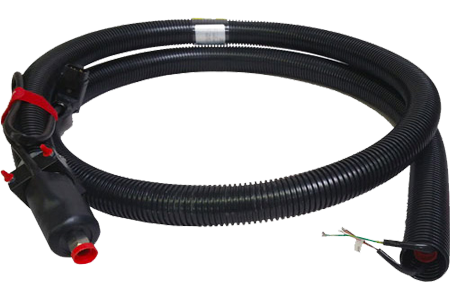
A hot melt adhesive hose is an electrically heated hose that carries molten adhesive from the tank or melter to the applicator gun for dispensing. With a heated and pressure-rated assembly, they are designed to keep the adhesive at application temperature along the entire length of the hose for proper dispensing.
A hot melt hose forms one of the melter’s controlled heating zones. Its voltage, heater load, temperature sensor, electrical connector, fluid fittings, and pressure rating must be compatible with the hot melt system.
Parts of a Hot Melt Adhesive Hose
Although exact construction varies by manufacturer and application, hot melt hoses contain multiple components and layers that contribute to safe adhesive transfer and consistent temperature control. Understanding these parts may help you diagnose problems more accurately.
A typical hot melt hose contains the following parts:
-
Core tube— The core tube is the inner flow path and is commonly made from PTFE because it tolerates heat and resists many adhesive chemistries.
-
Stainless steel braid— Usually made of stainless steel, the braid is wrapped over the core and reinforces the core against internal pressure, flexing, and vibration. Without it, the PTFE may balloon under pump pressure.
-
Heating element— A resistance heater runs along the length of the hose to keep the adhesive molten between the melter and applicator.
-
Temperature sensor (RTD)— A resistance temperature detector, or RTD, sends temperature feedback to the controller so the heater can be regulated in a closed loop.
-
Thermal insulation— Insulating layers reduce heat loss and help the hose maintain a consistent temperature along its length.
-
Outer jacket— An outer jacket of polyester, neoprene, or fiberglass-treated silicone, depending on the environment, can help resist abrasion, protect the operator, and keep moisture out in wash-down environments.
-
Fluid fittings and electrical connectors— Fittings at the manifold end and the gun end carry adhesive between components, while the electrical connection supplies heater power and sensor signals.
Because these components work as a system, one damaged element can affect the entire dispensing process.
The Different Types of Hot Melt Hoses

There are several different variants and configurations of hot melt hoses. The right type largely depends on the application and the hot melt system. Different manufacturers may also use different product names to describe the same general type of hot melt adhesive hose. Some of the most common hot melt hoses and their properties are highlighted below.
Standard Hoses
Standard heated hot melt hoses are a general term manufacturers commonly use to distinguish a general-purpose, limited-movement hose from other options. They are often composed of a PTFE core, stainless steel braid, and general-purpose jacket. Standard hot melt hoses are commonly used on fixed applicators for packaging, general assembly, and converting equipment.
High-Flex Hoses
High-flex hot melt hoses use construction designed to withstand repeated movement better than a standard hose. They can be a good fit for applications where the hose moves during production, such as reciprocating applicators, robotic equipment, movable heads, and frequently repositioned handguns.
Washdown Hoses
Washdown, or sometimes called water-wash hoses, use water-resistant construction to help prevent water and liquid intrusion into the heated assembly. Features may include protective sleeving, sealed end cuffs, and liquid-tight electrical components. They are used in washdown environments where the hose's exterior can be exposed to water or other fluids.
Corrugated Hot Melt Hoses
Corrugated hot melt hoses feature a flexible, ribbed exterior that helps protect the heated assembly while allowing the hose to bend. Depending on the manufacturer and construction, these hoses may be used in stationary or moving applications where abrasion resistance and exterior protection are important.
Braided Hot Melt Hoses
Braided hot melt hoses have a braided exterior covering that provides added abrasion resistance and mechanical protection. The braid may also help protect the hose from wear in demanding industrial environments. Because braided construction and materials vary, confirm that the hose is suitable for the application's movement, temperature, and operating conditions.
PUR-Capable Hoses
Polyurethane hot melt adhesives are unique and require specialized equipment. Because they cure through exposure to moisture, the hose needs to have moisture-control procedures in place. A PUR hot melt hose is sealed against ambient humidity and its purgeable from end to end.
High-Temperature or Specialty Hose
For materials designed for a higher temperature range and applications that exceed standard hose ratings, there are high-temperature and specialty hoses. While less common, these types of hot melt hoses are often found in demanding environments.
Other Variants
Beyond the general construction, hot melt hoses also vary in the following ways:
- Length— Hot melt hose length varies by manufacturer but commonly ranges from about 2 feet to 24 feet. Longer is not always better as every additional foot adds more heated mass, more pressure drop, and more dwell time for the adhesive.
- Voltage— The hose voltage must match the melter’s electrical specification. Depending on the platform, manufacturers may offer configurations such as 120 VAC or a range of 200 to 240 VAC.
- Temperature sensor— Sensor technology and nominal resistance vary by platform. A mismatched RTD can produce an inaccurate reading or a controller fault.
- Fluid fittings— Thread type, fitting size, orientation, and sealing method must match the melter and applicator.
- Electrical connector— The connector body, pin arrangement, and wiring must be compatible with the equipment.
- Pressure and temperature rating— The hose ratings must cover the system’s maximum working conditions, not just its normal operating point.
How to Choose a Hot Melt Hose
An adhesive hose can physically connect to a machine and still be electrically or operationally incompatible. Consequently, you need to ensure that you choose the correct type of hot melt hose with the compatible variants that match your application and system requirements.
For proper hot melt hose selection, we recommend working through the following in order.
-
Identify the melter and hose channel. Record the manufacturer, model, series, serial number if relevant, and available hose channel. These details establish the platform’s electrical and control requirements.
Where to find it: Existing hose tag, equipment records, and equipment manual
-
Record the original hose part number.
Photograph the hose tag, fluid fittings, and electrical connector before disconnecting the old assembly. The original part number provides the most reliable starting point for finding an exact replacement or documented cross-reference for a hot melt hose.
Where to find it: Existing hose tag or equipment records
-
Verify the hose dimensions. Determine the hose length and inside diameter. You may need to measure the actual routed path from the melter to the applicator.
Where to find it: Hose tag, specification sheet, or with physical measurements
-
Determine whether the hot melt hose moves. If the assembly repeatedly bends, reciprocates, or follows a moving applicator, a high-flex hose may be the right choice. Follow the manufacturer’s minimum bend-radius requirements.
-
Evaluate the operating environment. You need to account for wash-down procedures, abrasion, moisture, chemical exposure, ambient temperatures, cold floors, and nearby moving equipment. These conditions help determine the appropriate jacket and environmental rating.
-
Confirm the adhesive and temperature requirements. Record the adhesive product name and recommended processing range. Verify that the hose’s temperature rating covers the application’s highest expected operating temperature.
Where to find it: Adhesive technical data sheet, hose data sheet, and equipment manual
-
Verify maximum pressure and flow requirements. Confirm that the system’s maximum operating pressure remains within the hose manufacturer’s maximum working-pressure rating. Consider pump design, adhesive viscosity, hose diameter, hose length, and dispensing rate.
Where to find it: Hose data sheet, melter manual, and system operating records
-
Match the electrical specifications. Review the voltage, heater wattage, RTD or temperature-sensor type, electrical connector, and pin configuration. The hose load must remain within the channel’s electrical capacity.
Where to find it: Hose specification, existing electrical plug, and melter manual
-
Check the fluid connections. Verify the fitting size, thread type, sealing method, and fitting angle. The connections need to fit the equipment and maintain a secure seal at operating pressure.
Where to find it: Existing hose, equipment drawings, and equipment manual
-
Review approvals and grounding requirements. Ensure the hose complies with all equipment, facility, safety, and sanitation standards, including the system manufacturer’s grounding requirements.
Where to find it: Hose manual, equipment manual, and facility requirements
If you cannot find all of this information, consult with an expert rather than making a guess. Getting a hose that is incompatible will only create additional delays and extend your downtime. Once you know what hot melt hose you need, it can also be helpful to keep a spare on hand, so that failure doesn’t stop production.
Common Hot Melt Hose Problems & How to Avoid Them
Problems with hot melt hoses are not uncommon, but regular inspections and proper operating practices can help you prevent failures before they stop production.
| Common Problems | Causes | Prevention |
|---|---|---|
| Hose does not heat | Damaged wiring, loose connectors, incorrect voltage, or failed heater circuit | Verify compatibility before installation and inspect electrical connections regularly |
| Erratic temperature readings | Damaged sensor, loose pins, or incompatible sensor type | Match the RTD to the melter and protect connectors from damage |
| Low or inconsistent adhesive flow | Low temperature, char, clogged components, excessive hose length, or restricted flow | Use the correct temperature, hose length, and maintenance schedule |
| Leaking end fittings | Damaged fittings, incorrect seals, routing tension, or poor hose support | Support the hose properly and inspect fittings for wear or movement |
| Worn or damaged jacket | Abrasion, traffic, improper clamping, moisture, or tight bends | Keep the hose off the floor and follow minimum bend-radius requirements |
| Frequent char or nozzle clogs | Excessive heat, extended idle periods, contamination, or degraded adhesive | Use recommended temperature settings, activate standby mode, and follow approved cleaning procedures |
Before servicing a hot melt hose, make sure to follow the equipment manufacturer’s instructions and your facility’s lockout/tagout procedures. Never patch a leaking hose or operate one with exposed conductors, severe jacket damage, or suspected moisture intrusion. In some cases, it may be time to replace your hot melt hose.
Get the Help You Need
To work properly, a hot melt hose must match the system and the application. If you know your model and part number, you can browse our hot melt hose collection and find a compatible hot melt hose. If you need help determining which hot melt hose you need, our team can assist you. Contact us today to get started.